Guss

Robotics & Autonomy

Connected Intelligence for Fleets That Can’t Afford to Stop

Connected Farms gives robotics and autonomous machinery providers a connectivity layer built for command-and-control reliability - CommsXtend®, private 4G/5G networks, and satellite-on-the-move, so autonomous fleets stay connected, coordinated, and safe wherever they operate, without providers having to build their own network stack.

Robotics & Autonomy

Where Standard Coverage Runs Out

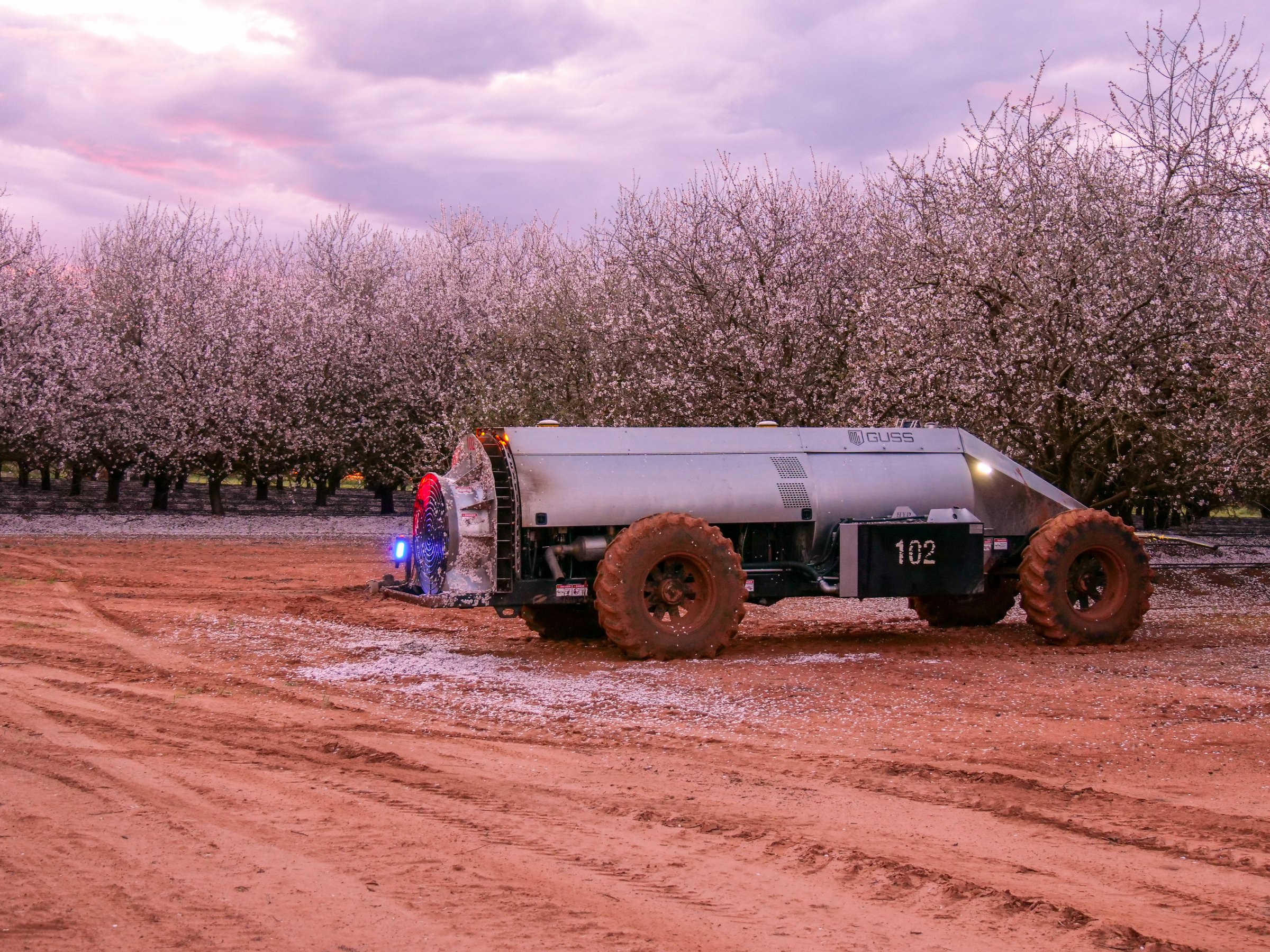
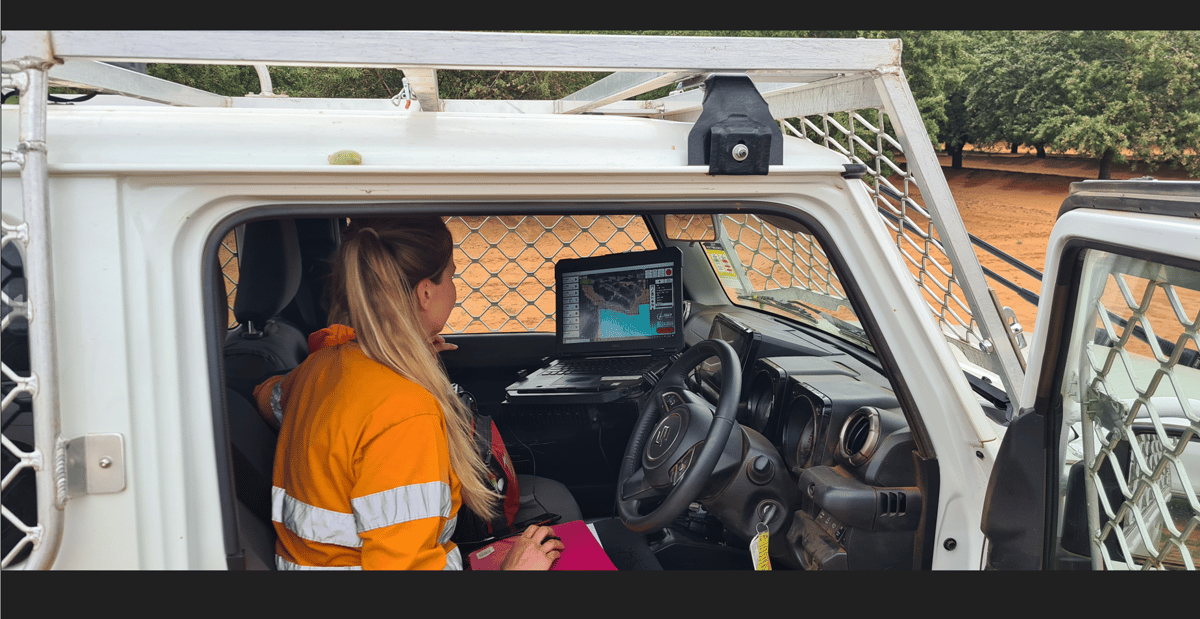
Ag-robot and autonomous implement providers face a distinct connectivity problem: command-and-control signals, LIDAR and camera-based obstacle-detection data, and safety-halt messaging all need to move in real time, and standard cellular coverage is neither reliable nor fast enough across the remote, changing environments these machines operate in.
coverage

How it works

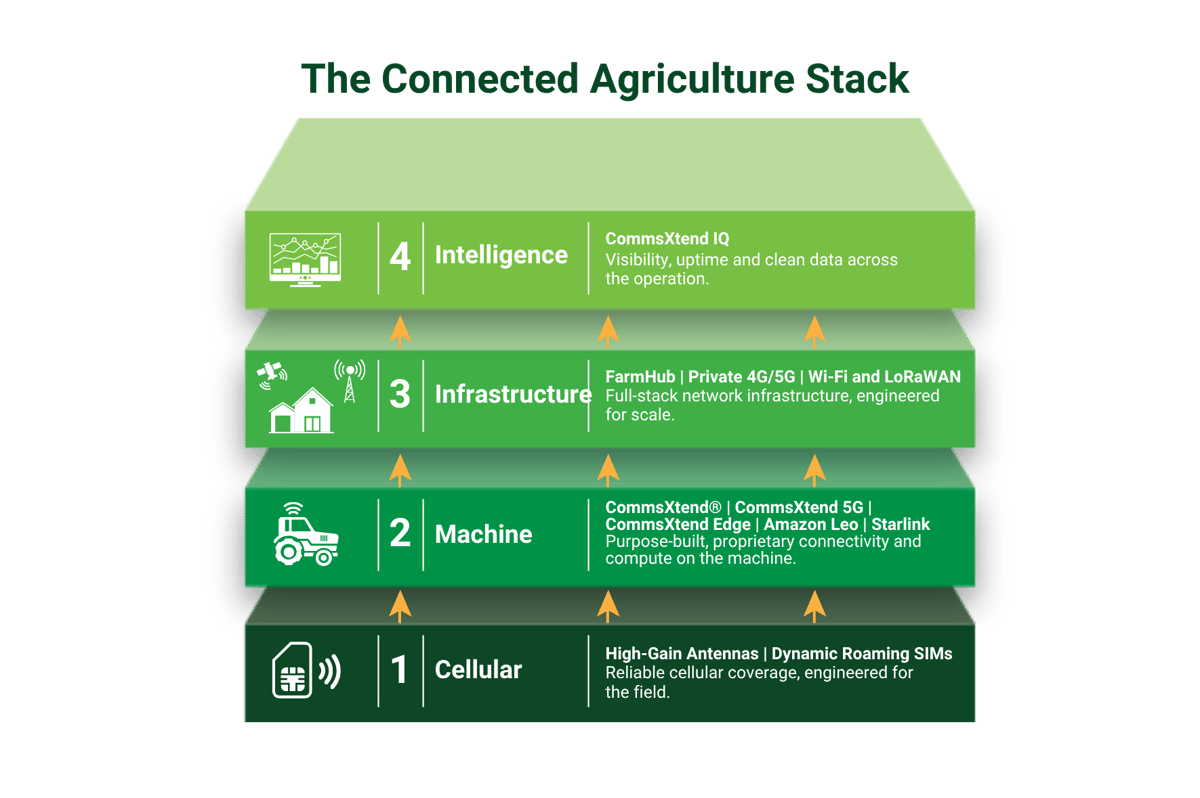
The Connected Agriculture Stack

CommsXtend® creates a private, high-capacity network zone around each robot, automatically extending onto satellite backhaul - Amazon Leo and Starlink - when mobile coverage is unavailable, with an AWS cloud layer for fleet-wide diagnostics and data flow.

This is Connected Farms' Connected Agriculture Stack - four layers, Cellular through Machine, Infrastructure and Intelligence, that together deliver Connected Intelligence: reliable enough for safety-critical functions like obstacle detection and remote go/no-go decisions, not just background connectivity.
CFN-30 Connected Agriculture Stack-Horizontal-3

Built With You, Not Sold To You

For fleets generating more data than the link can carry - camera and LIDAR streams, sensor logs, autonomy datasets - CommsXtend Edge adds on-machine storage and compute. Data is processed at the robot in real time for on-board decisions, then offloaded in bulk at high-speed transfer points the fleet already visits, rather than throttling everything through a live connection.

How integration works

Built for Command-and-Control Reliability

Integration is scoped around your fleet’s operational profile: Connected Farms works with your team to specify network latency tolerances, data throughput needs, and failover behaviour for safety-critical functions - like obstacle detection and remote operator hand-off, before deployment across your fleet.


  • Failover behaviour: automatic handoff between private network and satellite backhaul - no interruption to safety-halt or obstacle-detection messaging.
  • Fleet management integration: designed to integrate with third-party fleet management/telemetry software rather than requiring a proprietary dashboard.
Bonsai

Specifications

The connectivity stack, layer by layer:

Cellular layer

Dynamic Roaming SIMs and High-Gain Antennas - roaming connectivity across every available network, reducing the dead zones a fleet would otherwise inherit from a single carrier

Machine layer

CommsXtend® - private, high-capacity 4G/5G network zone around each robot, low-latency command-and-control link. CommsXtend 5G CommsXtend Edge - on-machine compute for autonomy-critical data (LIDAR, camera, obstacle-detection streams) too heavy or too latency-sensitive for a live link alone. Amazon Leo and Starlink - satellite backhaul with automatic handoff when mobile coverage drops, no interruption to safety-critical messaging.

Infrastructure layer

Private 4G/5G and Wi-Fi/LoRaWAN networks - for fleets operating on farms that own their network

Intelligence layer

CommsXtend IQ - fleet-wide visibility of connectivity, machine uptime, and network telemetry, across every robot and every brand

Full technical specifications: see the CommsXtend® product page

Questions Robotics & Autonomy Providers Ask Us

What case studies show connectivity working for agricultural robotics?

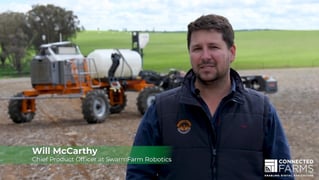
Connected Farms' primary case study for agricultural robotics connectivity is its deployment with SwarmFarm Robotics, referenced directly by their Chief Product Officer, Will McCarthy. This is a real, named deployment rather than a composite example, and is tagged for migration into Connected Farms' Proof Hub as the canonical case study archive. When evaluating connectivity providers for agricultural robotics, the strongest evidence is a named deployment where a fleet operator can confirm the connectivity held up in real operating conditions - not just a product specification sheet.

Does Connected Farms' connectivity scale across a robotics fleet?

Yes, Connected Farms' connectivity is built to scale across a fleet, not just a single machine. CommsXtend® creates a private, high-capacity network zone around each robot or autonomous vehicle, and an AWS cloud layer provides fleet-wide diagnostics, remote monitoring, and data pipelines across every connected machine, rather than treating each unit as a separate connectivity problem. Fleet-critical functions are built into the architecture from the start: automatic failover between the private network and Amazon Leo satellite backhaul means no interruption to safety-halt or obstacle-detection messaging as machines move in and out of standard coverage. Integration is scoped around a fleet's actual operational profile - latency tolerance, data throughput, and failover behaviour are specified with Connected Farms' team before deployment, and the system is designed to work with third-party fleet management and telemetry software rather than requiring a proprietary dashboard. Deployments like the SwarmFarm Robotics fleet demonstrate this at scale - connectivity that holds up across multiple autonomous units operating simultaneously, not just one machine in isolation.

What proof points show connectivity prevents autonomy failures in the field?

The clearest proof points are deployments where safety-critical functions - obstacle detection, remote shutoff, command-and-control signals - kept working continuously across a fleet's actual operating area, including in areas outside standard cellular coverage. Connected Farms points to its SwarmFarm Robotics deployment as direct evidence: a fleet operator confirming connectivity held up across real autonomous operations, not a controlled demonstration. The specific mechanism worth highlighting to a robotics provider evaluating this is automatic failover - because most connectivity failures that cause autonomy incidents happen at coverage edges, not in the middle of a well-covered zone, the proof point that matters most is whether a system keeps safety signals flowing exactly at that transition point. Connected Farms' automatic handoff between CommsXtend® private network and Amazon Leo satellite backhaul is built specifically to prevent that transition from ever registering as a dropped connection to the machine.

Does Connected Farms work in complete blackspots?

Yes — working in areas with no standard cellular coverage at all is exactly what Connected Farms’ Machine-First Stack is built to solve. CommsXtend® automatically extends onto the Amazon Leo satellite network the moment cellular coverage runs out, with no manual switching and no gap in connectivity.

Read the full answer on our Agribusiness FAQ →

Robotics Case Studies

See all case studies →